
Short answer: An Omegle alternative in 2026 should give you spontaneous stranger chat without accepting the old bargain: total randomness, weak context, and too little control. Blur is one option for people who want slower, conversation-first discovery. Its public product language says visuals are delayed or de-emphasized, block and report controls are available, and AI moderation is part of the safety layer. Treat those as design signals, not a guarantee that every chat is safe.
The search for an Omegle alternative changed after Omegle closed. The old question was simple: where can I chat with a random person right now? The better question is sharper: how much randomness do you actually want, and what guardrails should exist before a stranger gets your attention, your photo, or your trust?
What makes a good Omegle alternative now that Omegle is gone?
A good Omegle alternative preserves the useful part of stranger chat - meeting someone outside your normal social circle - while reducing the parts that made the format exhausting or risky. It can be text chat, video chat, social matching, or dating-style discovery, but the strongest replacements give users control over visibility, pacing, reporting, blocking, and exit.
Omegle closed in 2023, and its public homepage has been used for a shutdown message rather than the old random chat service. Because that status is a live website claim, check the current Omegle homepage before treating any replacement guide as final.
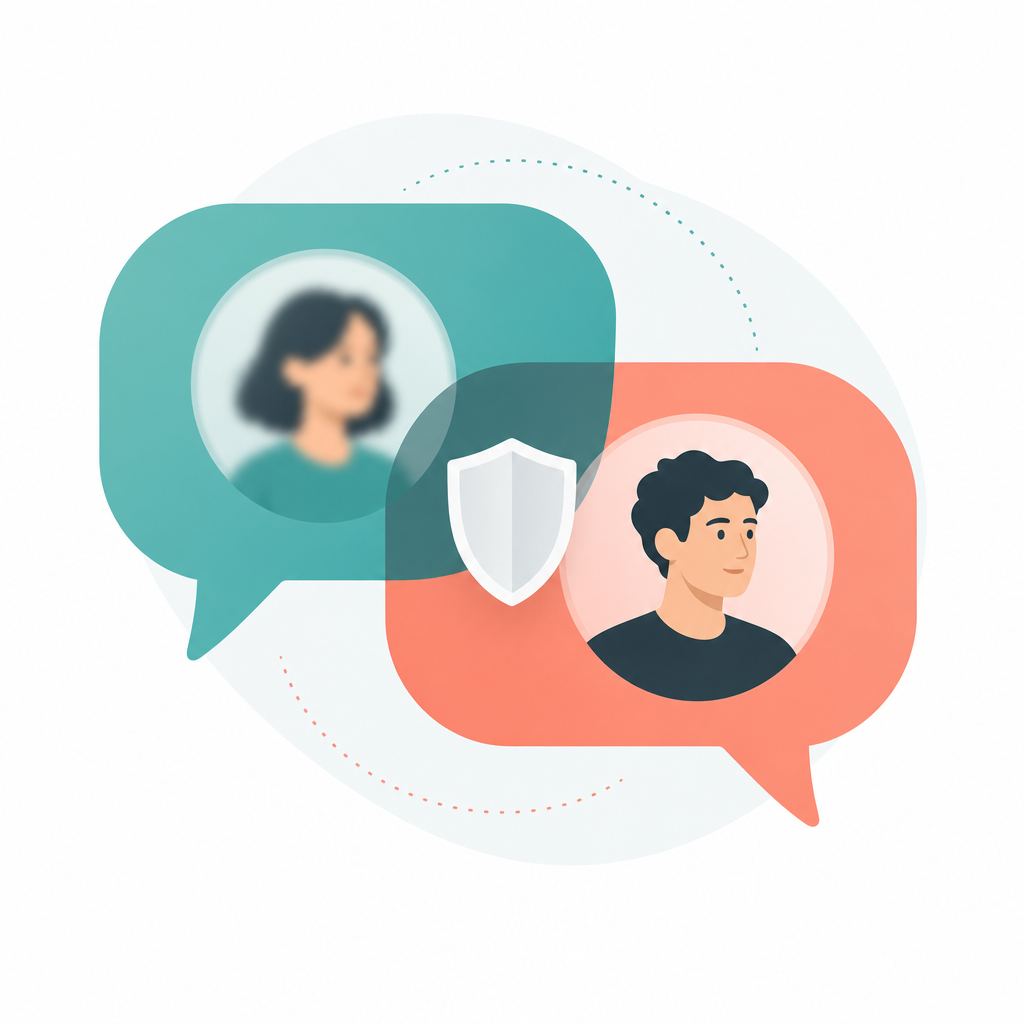
Blur's useful idea is that first impressions should not be controlled entirely by a clear profile photo or a live video feed. A blurred photo dating app can slow the moment down so personality, tone, and boundaries show up before visual judgment takes over.
How is Blur different from a random video chat alternative?
Blur is a random video chat alternative only in the loose sense that it offers a way to meet people you did not already know. It is not trying to recreate the jump-cut feeling of being thrown into a live camera feed with no context. The design leans toward social and dating conversation.
In classic random video chat, the first second often decides everything: appearance, background, lighting, voice, and whatever happens to be on camera. Some people love that speed. Many do not. It rewards snap judgment and makes the exit button the main interface. Blur changes the order by asking the chat to carry more weight before the image does. For instant-video users, that will feel too slow. For swipe-fatigued users, it may feel closer to a real first conversation.
Why do blurred photos change the dating conversation?
Blurred photos change the dating conversation by delaying the visual verdict. Instead of letting a profile picture do all the work, Blur's public descriptions frame the experience around personality-first contact and delayed exposure. The reveal becomes part of the connection, not the opening filter.
Picture a realistic first ten minutes. You match with someone whose photo is still softened out. You ask what they do after work, and they mention learning guitar badly enough that the neighbors probably know the same three chords. Maybe the conversation grows. Maybe it dies. Either way, the first decision was based on a human signal, not only camera angle or gym lighting. The limitation is obvious: physical attraction still matters for many dating users, and a delayed reveal can frustrate people if the timing feels artificial.
What safety features should an anonymous chat app be honest about?
An anonymous chat app should be honest that moderation reduces risk but does not remove it. AI can help flag patterns, images, language, and reports at scale, but it can miss context. The real test is whether users can block, report, leave, and control what they reveal without being pressured.
Safety claims get sloppy in this category. The word moderated can sound like a promise, when it is really a process. A safer app needs visible controls and plain rules: what behavior is not allowed, what happens after a report, how photos reveal, and what users should never share.
For Blur, the credible claim is narrow: the app says it is designed around personality-first conversation, delayed visual exposure, and AI-supported moderation. That supports a safer alternative to old random-stranger formats. It does not support claims that every chat is verified, every image is reviewed perfectly, or every bad actor is caught.
How we checked: For this June 2026 revision, we reviewed Omegle's public shutdown page and Blur's public product and store-facing descriptions, then limited product claims to what a reader can verify at the surface: delayed visual exposure, conversation-first matching language, block or report controls, and AI moderation as a stated support layer. We did not test enforcement speed, moderation accuracy, or every current in-app setting.
Claim: A safer Omegle replacement is defined less by randomness and more by user control before intimacy increases.
Why this matters: Risk rises when exposure moves faster than trust.
Limit: This does not prove Blur prevents harassment, scams, or unwanted contact.
Action: Treat reveal controls, reporting, blocking, and fast exit as core features.
What should parents and younger users ask before using stranger chat apps?
Parents and younger users should ask whether the app is age-appropriate, what personal information can be shown, and how quickly a stranger can move the conversation off-platform. The safest answer is usually not secret surveillance. It is clear rules, consent, and shared expectations.
If you are deciding what a teenager can use, a practical parent resource like ParentalPro family safety guide is more relevant than a generic app roundup. Family safety or monitoring tools should be legal where you live, age-appropriate, and discussed openly when possible. Younger users should not share an address, school, workplace, private handles, live location, financial details, or identifying images with someone they just met. If a stranger pushes for secrecy or another platform in the first few minutes, leave and report.
How should you compare Omegle alternatives before you download one?
Compare Omegle alternatives by the kind of first contact they create, not by how loudly they promise fun. The best choice depends on whether you want instant video, anonymous text, dating, slower social discovery, or a moderated mix.
For this revision, we used a tighter editorial teardown instead of a generic checklist. The point is to ask what a user experiences before trust is earned.
| Criterion | What to inspect | Editorial read for Blur |
|---|---|---|
| First contact | Instant camera, open text, profile browsing, or guided chat? | Closer to conversation-first social dating than classic Omegle-style video roulette. |
| Visibility | What can a stranger see before trust is earned? | Blur says visuals are delayed or de-emphasized. Check current settings before sharing. |
| Report and block | Can a user stop contact without negotiating? | Blur presents block and report controls as part of safety. |
| Moderation | Guarantee, or support system with limits? | Blur says AI moderation supports safer conversations. AI review is not perfect. |
| Best fit | Who benefits from slower pacing? | Someone who wants novelty plus dating-style boundaries, not instant random video. |
This is also where the phrase anonymous chat app needs a careful read. Anonymous should mean you do not hand over your real-world identity to a stranger at the start. It should not mean consequence-free behavior or no accountability inside the app.
What is the practical way to try Blur without over-sharing?
The practical way to try Blur is to treat the first conversation as a low-stakes screen, not a confession booth. Use the blurred-photo or delayed-visual flow to see whether the other person respects pacing. If the chat only works when you reveal more than you planned, that is useful information.
- Start with a light profile. Share enough to be conversational, not enough to identify your home, workplace, school, or daily routine.
- Let the delayed reveal do its job. Do not rush the visual step because silence feels awkward.
- Test boundaries early. Say no to moving platforms, extra photos, or personal questions. Watch the reaction.
- Use block and report without debating. You do not owe a stranger a hearing after they ignore a clear boundary.
- Keep first meetings separate from first chats. If dating turns into real-world plans, use normal dating-app caution.
The best stranger chat products still leave room for surprise, but they stop treating surprise as an excuse to remove judgment.
Where does Blur fit, and where does it not?
Blur fits people who want an Omegle-style spark without the chaos of fully random video. It also fits dating users who are tired of photo-first matching but still want eventual visual chemistry. It does not fit people who want instant cameras, public performance, or no-friction anonymity.
That distinction is useful. If you want a fast random video chat alternative because the thrill is the live reveal, Blur may feel too deliberate. If you want a safer social dating format where the reveal has to be earned by actual conversation, the slower rhythm is the point.
The honest pitch is not that Blur has solved online safety. Nobody has. The pitch is that design can change incentives: visuals can start blurred or less central, conversations have more room to prove themselves, and moderation gives users more than only the exit button.
Frequently asked questions
Is Omegle gone?
Yes. Omegle closed in 2023, and its public site has been used for a shutdown message instead of the old random chat service. Because websites can change, check the current Omegle homepage if you need the latest status before choosing an Omegle alternative.
Is Blur like Omegle?
Blur is like Omegle only in the broad sense that it helps people meet someone they did not already know. Omegle was known for fast random stranger chat, often with video. Blur is positioned around slower social discovery, delayed visual exposure, and dating-style conversation.
Is Blur an anonymous chat app or a dating app?
Blur sits between those categories. It can let people start with more privacy than a typical dating profile because clear visuals are delayed or less central, but the purpose is social and dating-oriented connection. Treat anonymity as an opening privacy layer, not as permission to ignore boundaries.
Does a blurred photo dating app make online dating safer?
A blurred photo dating app can reduce looks-first pressure and slow down over-sharing, which may make the first interaction feel safer. It does not remove the risks of harassment, scams, manipulation, or bad matches. Safety still depends on moderation, user controls, reporting, and user choices.
What is safer than random video chat with strangers?
A safer option is usually an app that slows first contact, limits what strangers can see, and gives you clear ways to leave, block, and report. Blur's delayed-visual flow is one example. It keeps some curiosity of meeting someone new while reducing the pressure of immediate live video.