
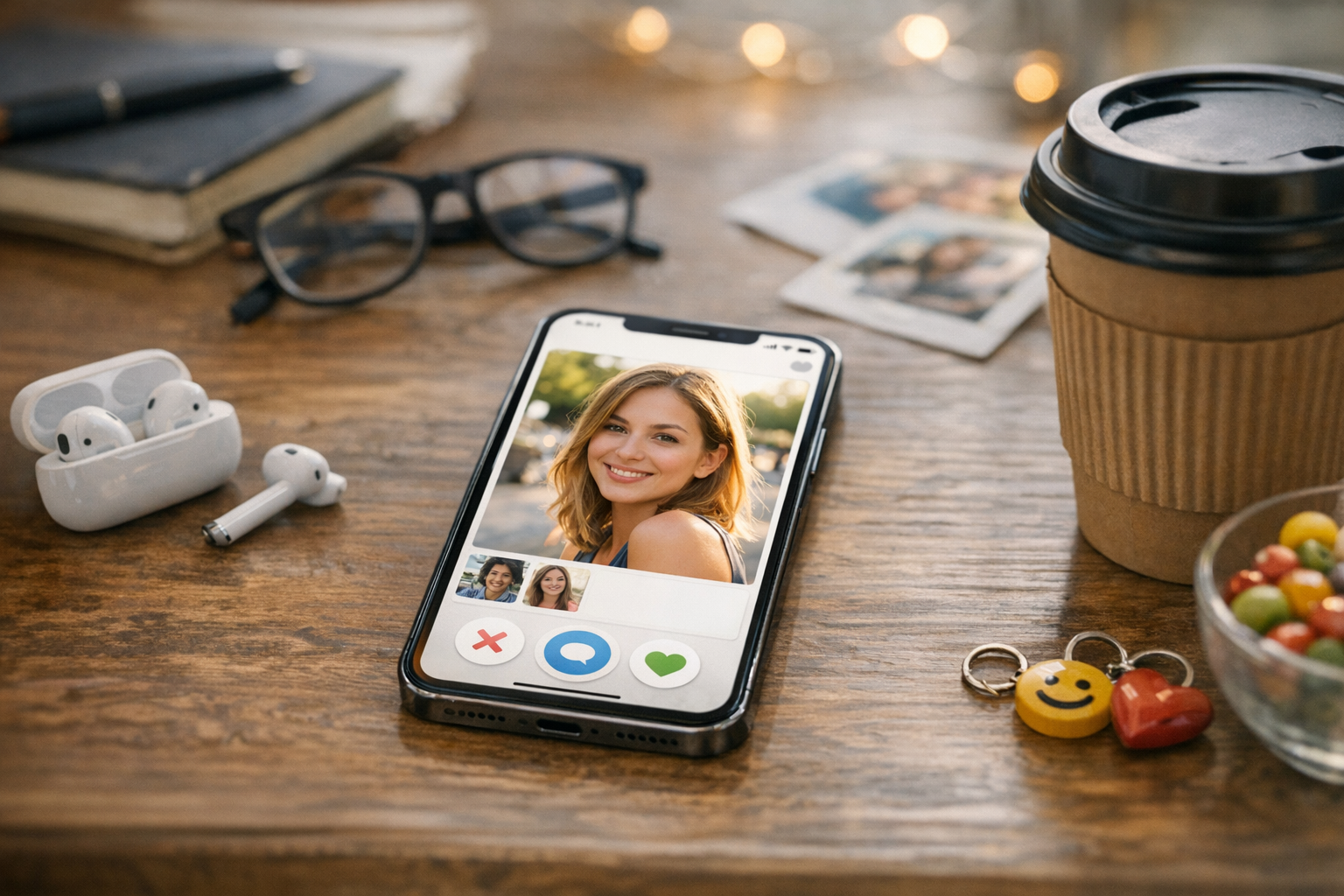
From Snapchat and Facebook to Tinder, Grindr, and Messenger: Where Blur Fits in Modern Dating
If you have ever moved between snapchat, facebook, messenger, tinder, and grindr just to meet someone, keep a conversation going, and figure out whether the connection is real, you already know the problem Blur is trying to solve. Modern dating rarely happens in one place. Discovery might start on a swipe app, casual conversation might shift to chat, and trust usually gets built only after a few scattered interactions across different platforms.
Blur is built for people who want that process to feel less fragmented. It is an AI-assisted social friendship and dating app; in simple terms, it is a social and dating app designed to help people discover matches, start conversations, and explore different relationship intentions without jumping through quite so many hoops. Whether someone wants a Tinder-style swipe experience, a more open-ended social chat flow, or a niche connection style, the core idea is the same: make first contact easier and make early conversations feel more natural.
This is not really about replacing every other platform. People will still use dating apps, social media, and direct messaging tools for different reasons. The value of Blur sits in the middle of that messy reality. It gives users one place to start the part that usually causes the most friction: finding someone relevant, opening a conversation, and seeing whether there is enough mutual interest to keep going.
The core problem: dating and social discovery are scattered
Most people do not struggle with access. There are plenty of dating apps, dating sites, free dating sites, and dating websites. The real struggle is that each product handles only one slice of the experience.
Tinder is often about fast browsing and quick first impressions. Grindr is more immediate and location-driven for many users. Facebook and snapchat tend to sit on the edge of the dating process, where people verify identity, share a bit more personality, or continue chatting after the first match. Messenger becomes part of the flow once a person feels comfortable enough to move the conversation somewhere more direct.
That patchwork works, but it can also create familiar problems:
- Too many apps for one simple goal: meet someone worth talking to.
- Matches that never turn into real conversations.
- Conversations that feel awkward, dry, or repetitive at the start.
- Unclear intentions, where one person wants casual chat and the other wants a serious relationship.
- Social fatigue from swiping, moving to another app, then starting over again.
Blur addresses that middle layer: the jump from interest to conversation. For many users, that is where dating stalls. They get the matching, but not the momentum.
Who Blur is for
Blur makes the most sense for people who feel underserved by rigid app categories. Some users want a classic tinder dating app feel, while others want something closer to social discovery. Some want flirtation, some want friendship, some want a long-term partner, and some simply want a space where starting a chat does not feel like work.
Practical user groups include:
- People tired of fragmented online dating: users who bounce between Tinder, Hinge, Snapchat, and Messenger and want a simpler starting point.
- Users exploring different relationship goals: not everyone is locked into one path. Some are open to dating, friendship, casual conversation, or niche dynamics depending on the person.
- People who prefer chat-first chemistry: users who care less about polished bios and more about how the conversation actually feels.
- Users who want a broad social pool: people comparing experiences across apps like Hily, Yubo, Feeld, Taimi, Jackd, or Tagged often want a more flexible entry point.
- Newcomers to dating apps: those who find traditional dating websites or fast-swipe apps a bit intimidating.
That matters because not every person searching for best dating sites is really looking for a formal site. Many are looking for a usable experience. The format matters less than whether the app helps them meet the right people and start talking without friction.
What makes the first-use experience different
The first time someone opens a dating app, they usually make a quick judgment: does this feel easy, or does it feel like another chore? Blur is best understood through that lens. Its job is not to overload the user. Its job is to lower the pressure around first contact.
That first-use value usually shows up in a few practical ways:
- Faster social orientation: users can quickly understand whether the space leans toward dating, casual chat, or broader social discovery.
- Lower opening-message pressure: starting a conversation often feels easier when the app is designed around chat flow, not just profile comparison.
- More room for intent: users can approach interactions with clearer expectations instead of guessing whether everyone wants the same thing.
- A smoother bridge from browsing to conversation: the hardest part of online dating is often not the match. It is what happens after.
That is why Blur fits people who have tried hinge dating, the hinge dating app, Tinder, or Grinder-style experiences and felt that the beginning of each conversation was oddly repetitive. The issue is not always the number of users on a platform. Sometimes it is the amount of social effort required to get past "hey."

Practical first-use scenarios
The easiest way to understand Blur is to look at realistic use cases.
1. You are tired of moving from Tinder to Messenger
A common scenario goes like this: you match on tinder, exchange a few lines, then one person suggests moving to messenger or snapchat. At that point, the energy often drops. Someone gets distracted, the tone changes, or the conversation never settles into a rhythm.
Blur is useful for people who want more of that early momentum to happen in one place before deciding whether to move elsewhere. This gives both people a chance to see whether the interaction has actual potential.
2. You want something broader than a strict dating label
Not everyone opening a social app wants a clearly labeled relationship track. Some want flirting without pressure. Some want companionship. Some want local social discovery that may or may not become dating. Some are exploring spaces adjacent to apps like Feeld, Taimi, Jackd, or Yubo and want something more open-ended.
Blur works well in that middle ground because it is not limited to one narrow identity or one rigid social script.
3. You use Facebook or Snapchat to verify people, but hate starting there
Many users still rely on facebook or snapchat for basic comfort checks. They want to know the other person seems real, social, and consistent. But very few people want those platforms to do the whole job of discovery, matching, and initial dating conversation.
Blur gives users a place to begin before shifting to those channels if and when that feels appropriate.
4. You want a chat-led alternative to Grindr or Tinder patterns
Some people like the speed of grindr or the familiarity of Tinder, but not always the interaction style that comes with them. They may want more context, a softer conversation start, or a less transactional rhythm. Blur can appeal to those users because it focuses on the connection stage, not just rapid profile sorting.
How to approach Blur on day one
For a first session, the best approach is simple.
- Set your intention before browsing. Are you looking for dating, casual chat, social discovery, or a specific connection style? If you are vague with yourself, your decisions get vague too.
- Make your profile easy to read. Avoid trying to sound clever in every line. A clear profile beats a crowded one.
- Start fewer, better conversations. It is usually more effective to begin with a small number of relevant people than to chase volume.
- Use specific opening messages. Comment on something concrete instead of sending a generic greeting.
- Do not rush the app handoff. Moving immediately to Messenger or Snapchat can work, but it often kills momentum if done too early.
That last point matters more than people think. One reason many dating apps feel disappointing is that users leave the structured environment too quickly. A little conversation in-app can save a lot of dead-end messaging later.
Common mistakes new users make
Even good apps can feel ineffective when people bring habits that work against them. New users often:
- Treat every match the same. Different people need different conversational energy.
- Overshare too soon. Being open is good; skipping boundaries is not.
- Move too fast off-platform. This often creates ghosting, not closeness.
- Chase maximum attention instead of fit. A smaller number of relevant conversations usually leads to better results.
- Compare every app by swipe volume alone. More profiles does not always mean better outcomes.
That is true whether someone is comparing Blur with Tinder, Hinge, Hily, Tagged, or other social chat platforms. A useful app is one that helps users get to meaningful interaction, not just endless browsing.
Where Blur fits among dating apps and social chat tools
Blur sits in an interesting space between classic dating websites, swipe-heavy mobile platforms, and everyday messaging tools. It is not trying to be exactly like Tinder, exactly like Grindr, or exactly like Messenger. It is better understood as a bridge between discovery and conversation.
That makes it relevant for users who have tested several formats already, from mainstream dating apps to more niche products such as Taimi, Feeld, Hily, Jackd, or even communities influenced by creator-first platforms like OnlyFans. The common thread is simple: people want easier access to compatible conversations, not just more accounts to scroll through.
If you are interested in apps built around focused mobile experiences, it is worth seeing how teams like AI App Studio build specialized mobile products or how NeuralApps approaches AI-powered app development. That wider app ecosystem helps explain why more users now expect digital products to reduce friction instead of adding steps.
The simplest way to think about Blur
Blur is for people who are not just looking for another place to swipe. It is for people who want the beginning of social connection to feel smoother. If Snapchat is where you continue the conversation, Facebook is where you verify context, Messenger is where you go direct, and Tinder or Grindr is where you usually start, Blur aims to improve that messy first stretch in between.
For some users, that means a Tinder-style matching flow with a better conversation setup. For others, it means an AI-assisted app for friendship and dating that feels more socially flexible than a strict category app. Either way, the purpose is practical: reduce friction, help people connect earlier, and make first-use dating scenarios feel less awkward than they usually do.
For the related workflow and its limits, read: Omegle Alternative: Controls and Limits When Meeting Strangers Online.