
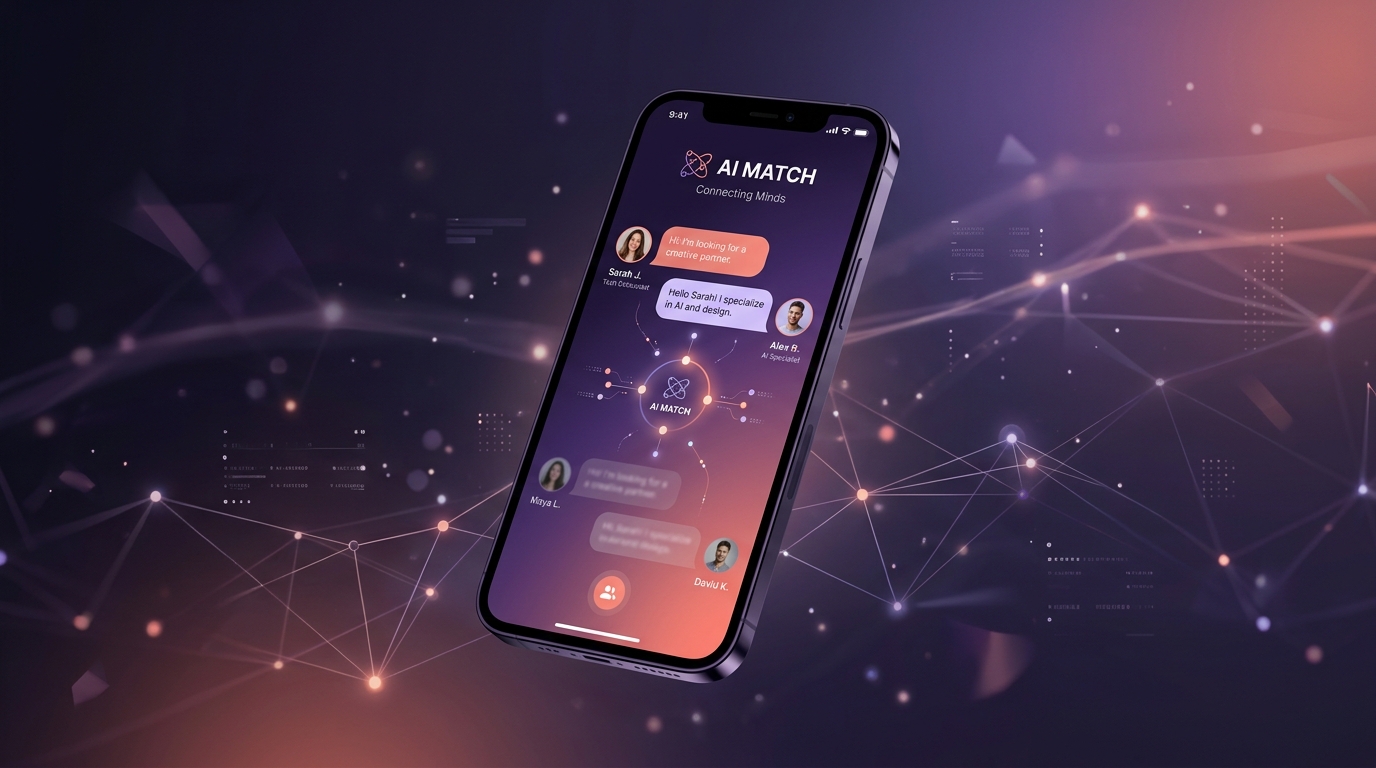
Collecting thousands of digital matches you will never actually talk to has become a standard, yet frustrating, experience. For years, the social discovery industry has relied on a high-volume, low-context model that burns people out faster than it connects them. Blur: AI Based Social Date App is a mobile platform designed for individuals seeking highly intentional relationships—from niche social discovery to traditional matchmaking—by using natural language processing to align user goals before any conversation begins.
Why are traditional matching platforms failing us?
As a software developer specializing in natural language processing, I spend a lot of my time analyzing how people initiate chat sequences. The core problem with online dating isn't a lack of options; it is a severe lack of structured intent. When you use a standard Tinder dating app or the Hinge dating app, the underlying mechanics are largely the same. You are presented with a stack of profiles, you make a split-second visual judgment, and if a match occurs, you are often dropped into a blank screen with zero conversational context.
This creates cognitive overload. People are migrating away from even the best dating sites because the interfaces demand too much manual effort for too little reward. The fatigue is measurable. According to a 2026 trend report published by industry analysts, user patience for inefficient mobile applications has plummeted, with 70% of users now deleting slow or clunky apps after just a single use. If an app doesn't immediately facilitate its core promise, it gets uninstalled. For dating apps, the core promise is connection, yet the traditional swipe mechanic actively delays that outcome by forcing users to sift through incompatible profiles.
How does artificial intelligence change online dating?
To fix the friction, we have to rethink the architecture of social discovery. Blur relies on an AI intent framework rather than generic geographic proximity. Instead of guessing what a person wants based on three photos and a one-line bio, the system analyzes communication patterns to identify shared goals.
I monitor global app trends daily, and the shift in user behavior is universal. Whether a user is searching for free dating sites in North America or searching for niche AI-based social apps in international markets, the frustration is identical. They want a platform that understands their specific social context, rather than a generic clone. The focus must shift back to meaningful matching.
My colleague Ayşe Çelik recently analyzed this behavioral shift in her piece on unpacking the new rules of social discovery, pointing out that modern platforms must categorize user intent accurately. Blur acts as a smart intermediary. If you are looking for a highly specific dynamic—such as a sugar relationship, a niche lifestyle connection, or a long-term partner—the NLP engine filters out the noise so your first interaction starts on common ground.
Who actually benefits from this intent-driven approach?
Understanding who a platform is for is just as critical as knowing how it works. Blur is built for people who value their time and mental energy. It serves individuals who are tired of fragmented experiences across multiple dating websites and want a single, intelligent hub.
- The Intentional Dater: If you are exhausted by Hinge dating routines that go nowhere, Blur's semantic matching ensures you only speak to people looking for the same relationship phase.
- The Niche Explorer: Users who historically had to rely on fragmented apps like Feeld, Down, 3Fun, or AdultFriendFinder for specific lifestyle dynamics can now use Blur's AI filters to state exactly what they want without ambiguity.
- The Social Networker: If you are simply looking for platonic connections or casual conversations similar to what you might seek on Yubo, Hily, or Taimi, the system adapts to prioritize friendship parameters.
- The LGBTQ+ Community: Finding safe, relevant spaces is crucial. Rather than juggling HER, Scruff, Jack'd, or Grindr, users can set precise identity and preference filters that the algorithm respects strictly.
Conversely, who is this NOT for? If you treat online matching as a passive game, swiping blindly just to collect notifications without intending to talk, this platform will frustrate you. The architecture actively deprioritizes low-engagement users to maintain a high-quality ecosystem. Exclusive communities like Raya thrive on gatekeeping; Blur achieves high quality not by restricting who can join, but by demanding intentional behavior once you are inside.

What do 2026 design trends reveal about the future of finding partners?
The visual clutter of older platforms is becoming obsolete. UXMode's 2026 mobile app design insights show a massive industry shift toward "minimal and silent design." Users no longer want flashing buttons and chaotic feeds; they expect interfaces that adapt dynamically to their context.
Blur integrates this silent design philosophy. The app gets out of your way. We utilize smart chatbots to guide the onboarding process smoothly, operating in the background to refine your profile. It is similar to how we've seen productivity improve in other sectors; for instance, the AI assistants developed by ParentalPro Apps handle complex data processing behind the scenes, leaving the user with a clean, actionable interface. When the interface is quiet, the conversation becomes the focal point.
How do you start making better connections today?
Transitioning from a volume-based mindset to an intent-based mindset requires a slight adjustment in how you set up your profile. Here are practical steps to optimize your first experience on Blur.
First, be brutally honest in your setup prompts. Because the platform uses natural language processing, the words you use matter far more than the standard checkboxes found on traditional dating sites. Instead of writing generic hobbies, describe the exact type of Tuesday evening you want to share with someone. The AI reads this context to find behavioral overlaps.
Second, utilize the chat assistant. As I detailed in a previous guide on how AI fixes the blank screen, Blur generates context-aware icebreakers based on the overlapping traits between you and your match. If you match with someone over a shared interest in obscure science fiction, the assistant will suggest an opening line related to that specific topic. You can edit it, send it as-is, or ignore it completely, but it removes the initial friction of saying "hi."
Finally, stop treating social discovery as a numbers game. Ten highly relevant conversations will always yield better real-world outcomes than a hundred silent matches. By embracing AI-driven intent, you take control of your digital wellbeing, ensuring that every interaction holds the potential for genuine connection.